Featured Post

It's happening!! It's not a drill!!

So... I know it's been a while, but I've come back to report an exciting update regarding my book! My debut YA romantasy book, Love...

Showing posts with label Good Movies. Show all posts

Monday, December 12, 2022

The Rift in the Multiverse


I’m not sure exactly what’s going on, but it's pretty clear that there's a rift in the multiverse right now. As a result, I can only speculate that we are living in the darkest timeline, and that this is one of the worst realities in the multi-verse. In the US, Roe v. Wade was recently overturned, gas prices are at an all-time high, and there is the looming possibility that more of our personal freedoms are going to be stripped away by the highest court in the nation. That's not even to mention the international headlines, such as Russia's war in Ukraine, or the global environmental crisis that is causing mudslides in Northern India.

As a result, our movies now reflect this idea of multiple versions of reality, where things could be better if only a few things were different. If one choice was different, what would be the outcome? For example, what if Donald Trump never became president? How would everyone's lives be different? Or what if COVID had been prevented? And so on, and so on... 

This resulting speculation is causing filmmakers to make several movies all about the multiverse. 

One could argue that all of this started back in 2017, with the release of the best (yes, I said best) multi-verse movie ever released, Spider-Man: Into the Spider-VerseBut even still, it has persisted. For example, three different multiverse movies have released within the past year alone (two of them were Marvel movies, but never mind that) all with varying degrees of success. Today we’re examining Spider-Man: No Way Home, Doctor Strange in the Multiverse of Madness, and Everything Everywhere, all at Once.

Let’s get it started, shall we? These inter-dimensional portals aren’t going to jump through themselves. 
 Spider-Man: No Way Home - C+

Allow me to be the first one to tell you that Spider-Man: No Way Home is an overrated movie. Don’t get me wrong: I’m not saying that because I didn't like the film, or because I didn’t have a good time in the theater when I saw it. I just think this movie is undeserving of the hype it got, and the subsequent praise as the best Spider-Man movie ever. 

(In case you’re unclear on my stance on this, you should read my review for Spider-Man: Into the Spider-Verse again as a reminder that Spider-Verse is the best Spider-Man film, animated or otherwise.)

That said, you can think what you want about the state of the Marvel Cinematic Universe at the moment (because there is a lot you could think), but you can't deny that Spider-Man: No Way Home was a big deal. Spider-Man: No Way Home was the first movie to make a billion-dollars during the COVID-19 pandemic, and it is currently the 6th highest grossing movie of all time. People went all out to see this movie, and so it had to be the best Spider-Man movie ever, right?

(*crickets*)

...Right? 

Well... let’s get into it.

The plot of Spider-Man: No Way Home follows Peter Parker (played by Tom Holland) after he's recently been exposed as Spider-Man by his now deceased villain, Mysterio (played by Jake Gyllenhaal in Spider-Man: Far from Home). Now Peter Parker is considered a public enemy who murders people. In response, he, his girlfriend MJ (Zendaya), and his friend Ned, are basically forced to go into hiding. However, when his reputation impacts Peter and his friends' ability to get into college, Peter goes to his dear old friend, Doctor Strange, to fix things. 

And here is where the plot gets messy, so buckle up.

Peter asks Doctor Strange to use his powers to cast a spell to make everyone forget that Peter Parker is Spider-Man. However, when Peter gets tripped up on his words, the spell goes haywire, causing the multi-verse to rip apart. Now (SPOILERS TO FOLLOW) instead of forgetting that Peter Parker is Spider-Man, everyone from every universe who knew that Peter Parker was Spider-Man is coming to find Peter. This includes some of Spider-Man's most infamous villains from other movies such as Doc Ock from Spider-Man 2 (played again by Alfred Molina), Electro (played again by Jamie Foxx) from The Amazing Spider-Man 2, and of course, the Green Goblin (played again by the delightfully unhinged Willem Dafoe) from the original Spider-Man movie from 2002.
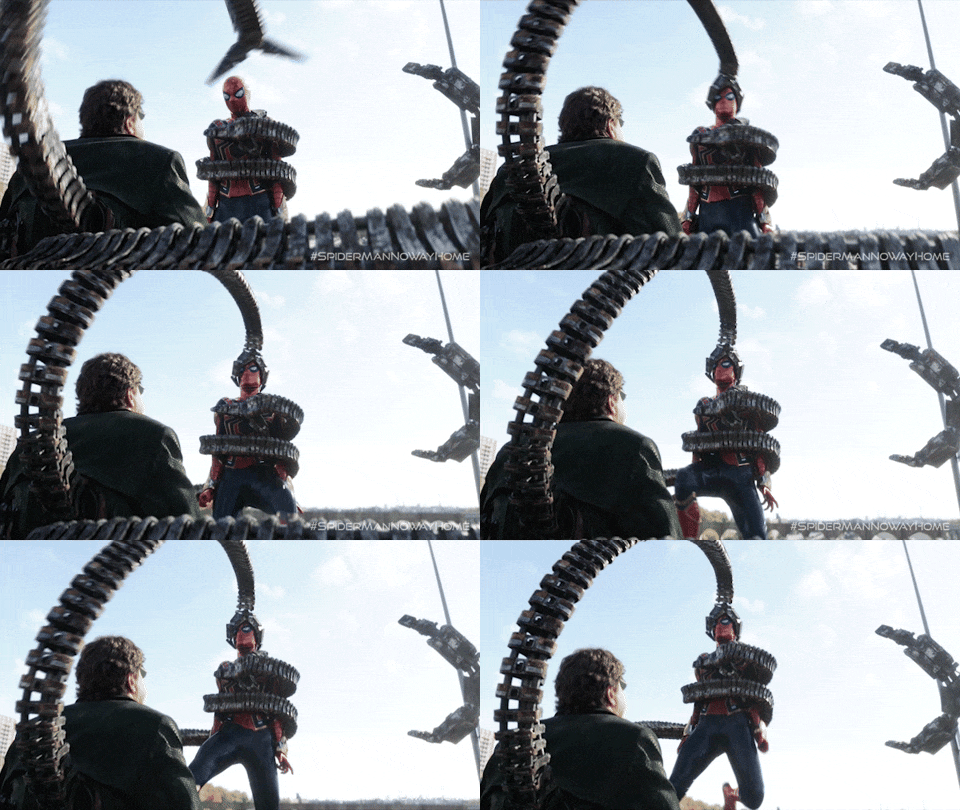
Dr. Octopus (Alfred Molina) trying to kill Spider-Man (Tom Holland)

Once Peter realizes what's going on, instead of attempting to reverse the hole he created in the multi-verse, he decided to cure the villains of their evil powers and prove to them that he was not a murderer like the Spider-Men from the universes they came from. So, after some shenanigans, Peter (Holland), along with other versions of Peter Parker/ Spider-Man across the multi-verse (Tobey Maguire and Andrew Garfield) set out to cure their villains of their evil powers before sending everyone back to the dimension where they came from. 

Now that I’ve laid everything out, it’s clear that the plot has a multitude of holes in it. Everything about this story seems incredibly contrived and arbitrary. 

Like- why didn't Doctor Strange stop the spell after Peter tried to fix it the first time? 

What do you mean you want to change the bad guys and turn them good? How is that going to help them if they still have to be sent back into their universe where they die anyway? Wouldn't that impact the grand timeline or disrupt the multi-verse or something? 

Why didn't Zendaya push the button that would send everyone back to the proper dimension after the Green Goblin killed Aunt May? She totally said she would push it if things went wrong, and yet she didn’t.

The answer to all of these questions is- so the plot can happen. Without any of these very specific plot holes the story wouldn’t progress, and the movie would be over. I don't know about you, but to me these seem like HUGE problems that should’ve been buffed out in a writer’s room somewhere.

That's not even to mention the logistics of the multi-verse. The film never explains what happens to the villains once they go back to their universes. We don't even get a flashback scene to a previous Spider-Man film, which I thought would have been a cool way to show continuity, but no. Also, by wishing for everyone to forget Peter Parker at the end of the movie, does that erase the other Peter Parkers from the other universes? There are so many questions left unanswered.  

And yet... people ate this movie up to the tune of 1.9 billion dollars worldwide. And while I definitely have several critiques about this movie's plot and structure, I have to say... I kind of get it.

High School Musical 3: Senior Year (2008)

Hear me out: No Way Home is the High School Musical 3 of Spider-Man films, in that it’s light on plot and heavy on fan service. This movie probably wouldn't make a lot of sense if you haven't seen any of the previous versions of Spider-Man, just like High School Musical 3 doesn't mean anything to people who didn't see the original two. Funnily enough, both movies even have a plot where everyone is trying to get into college, and all of the characters try to delay the inevitable before (SPOILERS for No Way Home and HSM3) the main couple break up in the end. 

Jokes aside, I will say that although No Way Home's plot is inherently flawed, the movie itself is still entertaining. There's something to be said about reuniting three generations of Spider-Man on screen and bringing everyone together for a kick-ass tribute to the web-slinger. It was so much fun to watch this movie the first time in theaters, and I can tell that all of the older Spider-Men actors involved were glad to be a part of this movie. (Despite the press interviews that very clearly stressed out Andrew Garfield before the movie came out.)
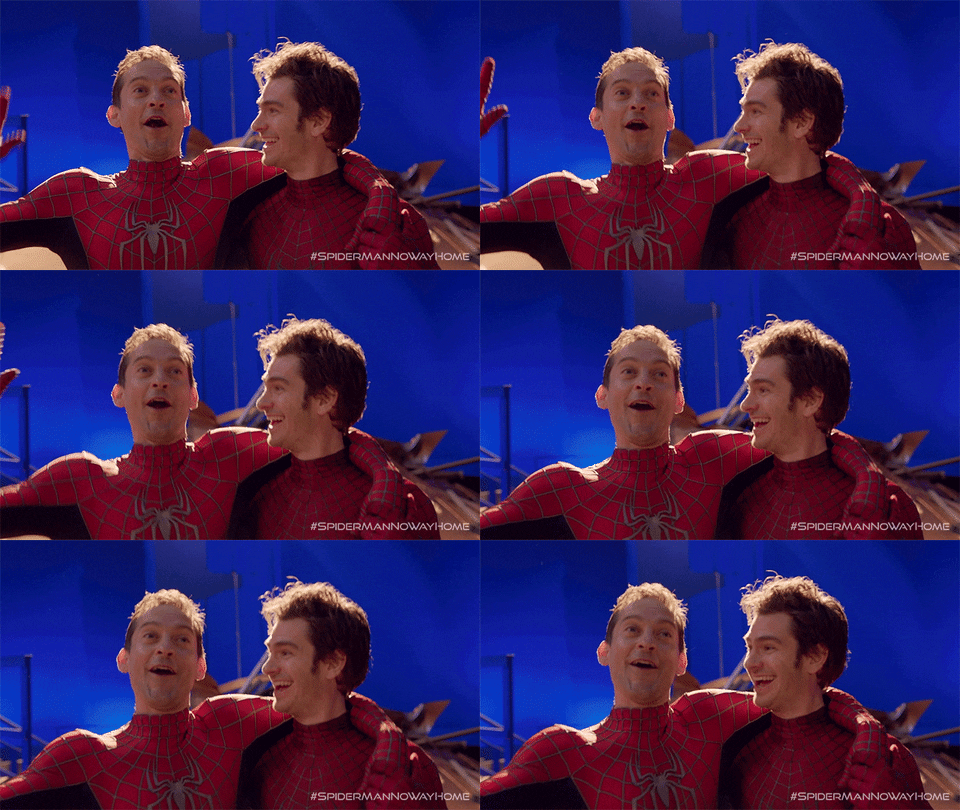
Happy bois!! (Tobey Maguire and Andrew Garfield)

This movie has the benefit of spectacle on its side. As stupid as this sounds, there's something exciting about this particular brand synergy. Marvel and Sony own every version of Spider-Man put to film, and so for them to come together to prove that the previous versions of Spider-Man weren't failed launches/reboots, but in fact, versions of the same character from alternate realities, feels like a treat to the fans who saw every Spider-Man movie that came before No Way Home (even Venom).  

Bringing every previous version of Spider-Man into this movie really saved the film for me. Despite how messy and nonsensical the plot was, I can't deny that I was sucked in by the charm of Andrew Garfield reprising his role as Spider-Man in this movie. I also really liked seeing Tobey Maguire again as an older version of Peter Parker. Seeing him play this role again after 20 years was nostalgic in a way I couldn't explain. (Despite all my gripes, I can confidently say I would have loved this movie hands-down if the MCU had introduced Miles Morales in this film. (Although Jamie Foxx did make a nod to there being a black Spider-Man).)

As of right now, who's to say what's next in the world of Spider-Man? I do hope to see more of Andrew Garfield in the role, because he was incredibly good as the web-slinger (despite my less than stellar feelings about The Amazing Spider-Man movies), and so it's promising that he's signed on to be in more Marvel projects in the future, whatever that means.

I can still confidently say that this movie is overrated, because despite the hype that it received from fans, it's far from the best Spider-Man movie. However, with a solid rewrite, No Way Home could have easily been a top ten Marvel movie for me. As it stands now, though, it's a little too underwritten to bump any of my other superhero faves.

Now that that's done, let's hop into a different, but not dissimilar dimension, where things are a little... strange.

Doctor Strange in the Multiverse of Madness- D+

(Get it, because I said strange before?)

I’m conflicted on this rating because I don’t think this movie is as bad as my grade would make it seem. However, I stand by the decision to grade Doctor Strange in the Multiverse of Madness a D+, because that was truly what I felt it deserved after watching it. In my opinion, this was a very expensive, very well-made cheese fest. This movie couldn’t have been cornier if you stranded it in the middle of rural Illinois.

It’s not so much that this movie is bad- it’s just… 

Well…

Let’s start with the plot, and then we’ll discuss.

The plot of Doctor Strange in the Multiverse of Madness follows Doctor Strange as he attempts to save a teenaged girl named America Chavez from demons hunting her across the multiverse. America has the ability to jump through the multiverse, and so someone is trying to kill her and take her powers for themselves. 

When America finds Doctor Strange and Wong (the Sorcerer Supreme), Doctor Strange goes to his old friend, Wanda Maximoff, AKA the Scarlet Witch, for help. (SPOILERS AHEAD) Only, it turns out that Wanda was the one trying to capture and kill America Chavez the whole time in order to jump to a universe where she has children and can be a mother again.

The plot ensues when Wanda chases America and Doctor Strange across multiple universes (it’s actually only like 3) in order to kill America and take her power for herself. 

(*Sigh*) Now… that was a lot

Right off the bat, this movie is introducing a lot of new information that doesn’t fully make sense if you’re not keyed into what’s going on in the Marvel Cinematic Universe at all times. Like No Way Home that came before it, Multiverse of Madness really asks viewers to be aware of everything under the Marvel brand umbrella in order to follow their latest movie/TV show.

This is especially evident with the movie’s main antagonist, Wanda Maximoff. For those people who do not have a Disney+ subscription, the last time she was shown on screen was in the billion-dollar finale to the original Avengers franchise, Avengers: Endgame. Since then, however, Wanda Maximoff has made a dramatic transformation. In the span between Avengers: Endgame and this film, Wanda has been developing wildly as a character. This development only makes sense, though, if you have a Disney+ subscription and watched the first of many Marvel shows, WandaVision.

For context (which is actually very important to the plot of this movie, annoyingly), the plot of WandaVision follows Wanda after the events of Infinity War and Endgame after she is coping with the loss of Vision, the man/android that she loved. (SPOILERS for WandaVision) In her grief, she ends up capturing an entire town of people and brainwashing them into thinking that they’re in a family sitcom, with her family as the leads (It’s a lot more endearing than it sounds, I promise.). In her fantasy sitcom, Wanda is married to Vision and they have twin boys together. They recreate classic sitcoms such as I Love Lucy and The Brady Bunch, full of wacky shenanigans. Only, she willed Vision and her sons to exist through magic, and they are not real. 

By the end of the series, Wanda has to cope with this by dealing with the trauma caused by the loss of her brother, her family, and her husband. At the end of the show, Wanda releases the town from their spell and lets go of her husband and children, leaving to study her witchcraft alone

I’ve said this before in my review of The Fate of the Furious, but it bears repeating now. Franchises that require moviegoers to be tapped into every previous iteration of every character and to know every movie by heart before watching the latest one are usually not good movies. Movies like The Avengers and other crossover films have been using this strategy to promote the Marvel brand for years, and for the most part it has worked out fine. However, something about incorporating WandaVision, a Marvel TV show that premiered on Disney+, feels different. The barrier to entry has risen. 

Let’s say someone didn’t have a Disney+ subscription and had never even heard of WandaVision (but knew all of the previous Marvel movies); they would be completely lost when going into this film. Which is why I argue that movies -especially when they’re big commercial properties like Marvel- should be able to be enjoyed without having to go looking for supplemental material to fill in the gaps. At this point, there are so many Marvel properties and superheroes that having to know everything about every single one of them feels like homework. 

As someone who never saw any of the other Marvel shows that originally aired on Netflix like Luke Cage and Jessica Jones, I can’t help but feel sympathetic to this. Brand synergy can only get you so far, especially when the MCU has expanded outside of the realm of theatrical releases. If either of these characters were to show up in a future Avengers movie (which I’m sure they will) I will have no idea who they are or what their story is because I never watched the supplementary material about them when it was on Netflix. (I probably won’t seek it out now that it’s transitioning to Disney+, either.)

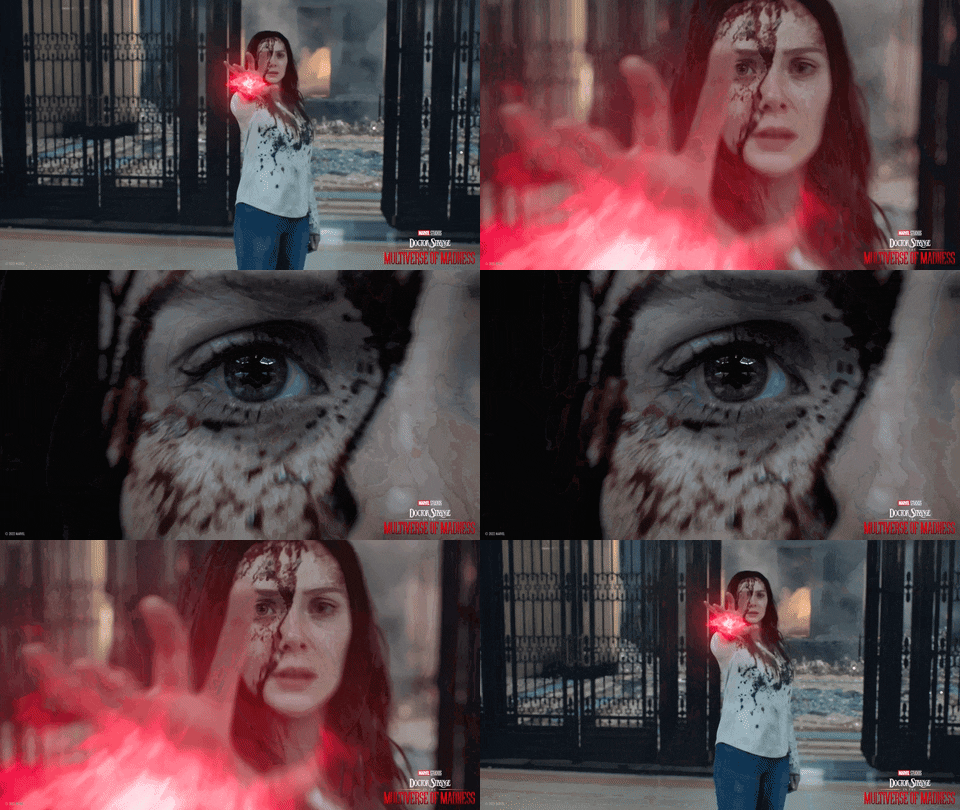
However, I will say that even with the added context of WandaVision, Wanda’s villainous motivation doesn’t really add up in Multiverse of Madness. No, something weird happened with her character in the span between WandaVision and this movie. Somewhere behind the scenes, Wanda essentially went from this:
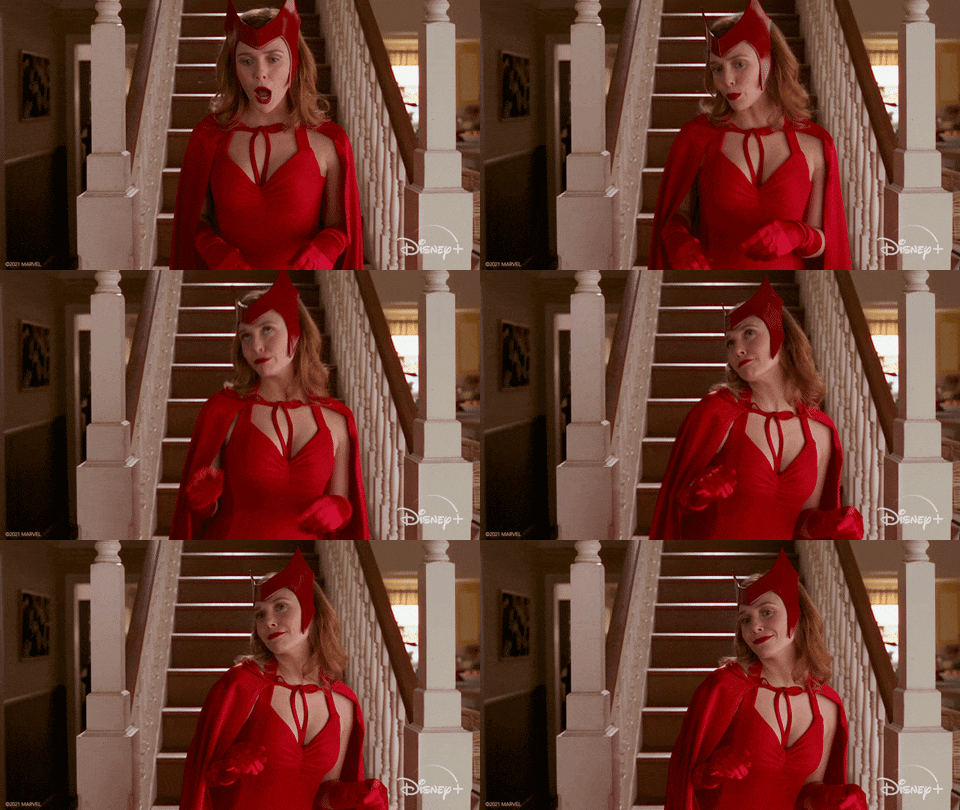
Wanda Maximoff (Elizabeth Olsen) in WandaVision

to this:

Wanda Maximoff (Elizabeth Olsen) in Multiverse of Madness

If you want to talk about flaws with this movie and character development, the crux of them fall on Wanda Maximoff as a character. All of the growth that she made in WandaVision in regards to getting over her grief and the loss of her husband and children (who were recreations that she conjured through magic, by the way) disappeared faster than her Sokovian accent, all so she could be evil in this movie, even though it didn’t make sense. Her entire motivation falls apart once you watch WandaVision, and yet you need to watch the show to even make sense of her motivation, which is even more frustrating.

Even aside from the faulty villain, Multiverse of Madness feels like a camp movie. In the same way that Wonder Woman 1984 made no sense, so too does this film. While this movie is not nearly as nonsensical or bad as Wonder Woman 1984, many details in this movie were eye-roll inducing, or downright silly. Some examples off the top of my head are Doctor Strange’s introduction to the Illuminati (to which Doctor Strange responds “Illumi-whaty?” which literally made me groan in pain), and America Chavez’s fear of bees opening up a multiverse portal that potentially killed her parents (yes, really).

The camp of this film is to say nothing of the directing, which was definitely influenced by Sam Raimi’s style. Despite directing a few of the previous Spider-Man films starring Tobey Maguire in the early 2000s, Raimi really hasn’t directed any other superhero films, especially Marvel films. However, since Raimi returned to Marvel for Multiverse of Madness, there were definite horror details throughout it, like jump-scares, plenty of blood, and even an insane zombie scene in the third act. It was interesting to see Raimi take on another superhero movie and alter the genre to be more horror-like, just like when he introduced Doc Ock in 2004 with Spider-Man 2. However, the horror directing only added to the over-the-top nature of this movie for me.

Overall, this movie just felt like it was… too much. Everything that happened in this movie seemed like it was out of character or just outright corny. By the time zombie Doctor Strange showed up at the end of the movie, I was… tired. This movie was disappointing for a multitude of reasons, but it definitely was madness.

With that, let’s move on to our final movie in this multiverse. 

Everything, Everywhere, All at Once- B-

This movie gets it right where all of the others got it wrong. This movie feels authentic, and it was made with an intention of telling a real story instead of just making money or capitalizing on nostalgic IP. This movie can be felt where the others were more hollow. Even the best attempts from Peter Parker and Wanda Maximoff couldn’t get me to cry, and I’m a crybaby. 

But this movie? 

Man, this movie… I was practically weeping by the time it was over.

In case you haven't seen it, Everything, Everywhere, All at Once follows Evelyn Quan (Michelle Yeoh), a Chinese immigrant who is currently going through it. She and her husband, Waymond (Ke Huy Quan), own a laundromat that is currently being audited by the IRS, and their marriage is on the brink of collapse. To top everything off, in an effort to keep her old-fashioned father happy, Evelyn asks her lesbian daughter not to come out to her grandfather at the family's Chinese New Year celebration, further driving a rift between her and her daughter.

It truly seems like everything is falling apart for Evelyn, even though she's trying so hard to keep it together.

But then- she discovers the multi-verse.

Evelyn discovers that the multiverse is made up of a web of dimensions connected by every choice that was or was not made in life. In this dimension, she is actually the most miserable version of herself because of all of the choices that she made throughout her life. In learning about the multiverse, Evelyn gets a glimpse at all of the lives she could have lived if her circumstances or choices had been different. There are universes where she never moved to America and became a singer, there are universes where she became a chef at Benihana, there are universes where she has hotdogs for fingers- anything could happen in any multitude of universes. 
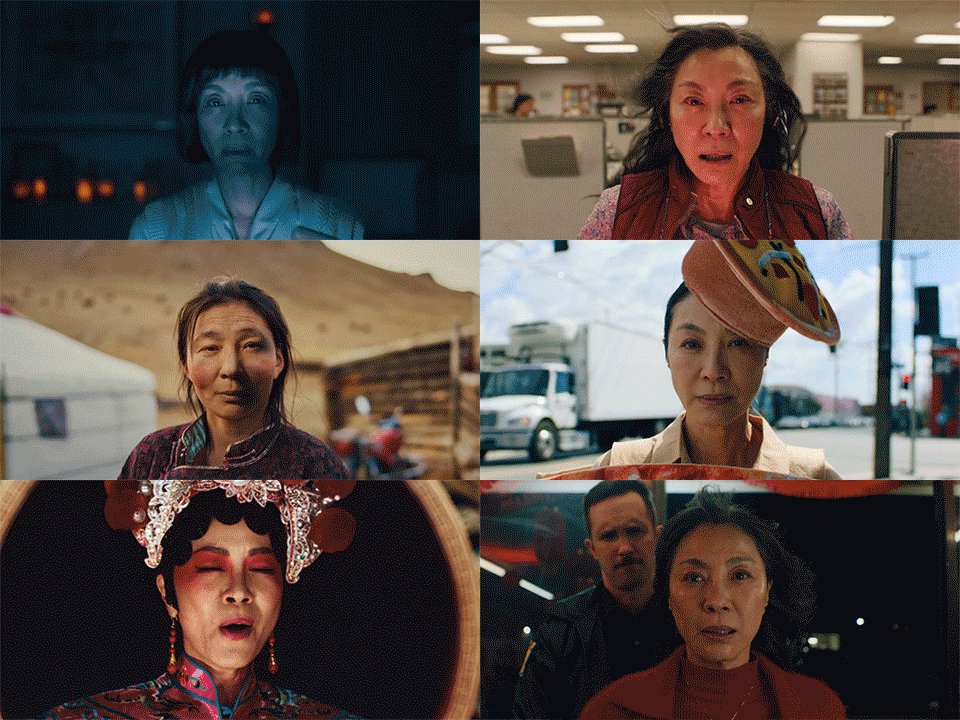
Through some shenanigans (because I don't want to spoil the movie, and I'm not sure I could even if I wanted to), Evelyn discovers that despite being the worst version of herself, she is the version who is destined to save the multi-verse from the universe-jumper, Jobu Tupaki, who was causing the end of all things.

This movie left me feeling more than a few things while watching it, but primarily, I was impressed. I really enjoyed the action scenes in this movie, and the kung-fu that Michelle Yeoh and  Ke Huy Quan demonstrated throughout the film. It was honestly cool to see a modern kung-fu movie where the leads were realistic portrayals of an immigrant family. Big props to the fight choreographer for constructing such cool fight scenes using props that I had never seen used before in kung-fu movies (like a fanny pack, for example).

Another thing that I was deeply impressed by was the costuming for this film. Specifically, the costumes for Jobu Tupaki were AMAZING. Being able to jump through universes gave them a great sense of style, and I loved looking at the outfits in this movie. Every version of each character in this film had a different look, and so costuming each actor for each universe must've been difficult, but I would be lying if I said that I didn't love Shirley Kurata's work on this movie. The writers were working hard on this movie, sure, but Shirley was making the characters come to life. The costume designer for this movie was a 10/10, and I hope to see more projects that she works on.

I think I was overwhelmed by some of the plot, though. A lot of the multiverse theory was confusing to me at first, because it felt sudden to me when it happened in the film, even though I had some inkling of what this movie was about before I watched it. Perhaps I was just slow to keep up, but I found myself momentarily confused by some aspects of the multi-verse, or even failing to keep up with which universe we were currently in. I admire this movie for being different and keeping the concept fresh, though. This was a different take on the multi-verse jumping that we've seen in other media, so that was nice. Aside from my confusion, I still think that the overall story itself was compelling and touching.

The humor in this movie reminds me of a Hitchhiker's Guide to the Galaxy book. The Hitchhiker's Guide to the Galaxy books and Everything, Everywhere, All at Once share a unique sense of nihilism and absurdism that oddly works. The wackiness of the universes in this movie mixing with the concept of nothing having real consequence screams The Restaurant at the End of the Universe to me (as we all know that the answer to life, the universe, and everything is 42). As if that wasn't enough, in The Hitchhiker's Guide books, there is a device known as an Infinite Improbability Drive, which calculates the likelihood of anything in the universe happening when you jump across the universe. The idea behind the random "verse-jumping" in this movie is the same as the Improbability Drive: if the universe can exist, it's probable that it does, and you could end up anywhere. 

However, the heart of Everything, Everywhere, All at Once is Evelyn's relationship with her family. (SLIGHT SPOILER) Once she realizes the Jobu Tupaki is attempting to take over her daughter by convincing her and everyone around her the nothing has meaning in an endless multi-verse, Evelyn is forced to make a choice- to believe that everything that is happening everywhere all at once is meaningless, or to hang onto her family despite everything.

(In case you were wondering, this was the part that made me cry.)
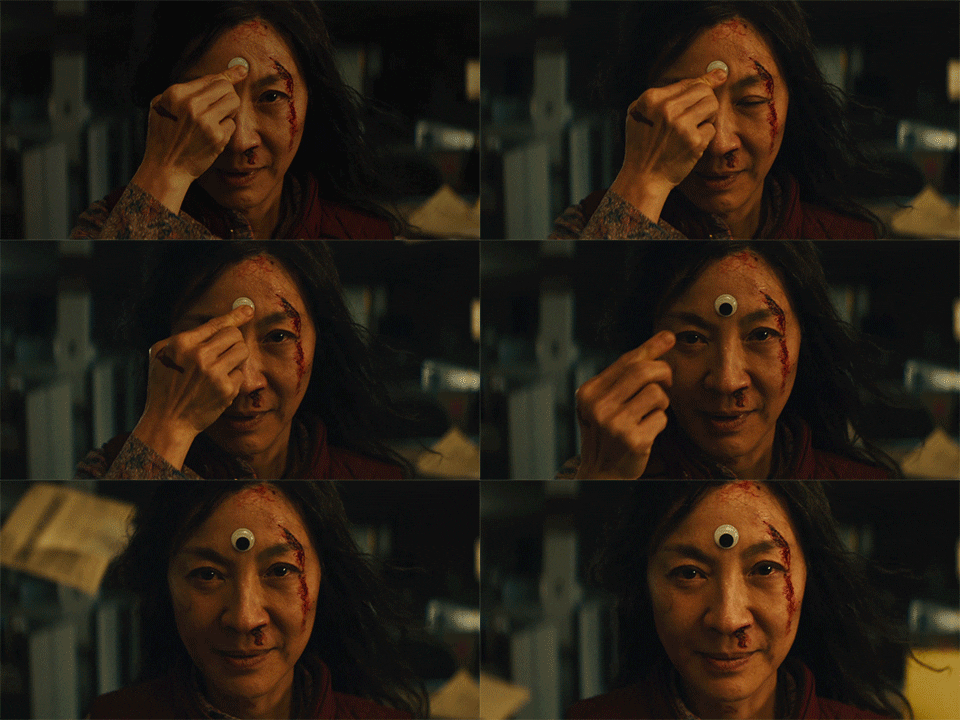

Now, since we've covered Everything, Everywhere All at Once, I think I'm a little tired of all this verse-jumping. There're only so many universes I can travel to in one day. 

Let's go home.


And... we're back.

Perhaps this really is the darkest dimension and the most chaotic timeline. Somehow even if our fingers were hotdogs or if we wound up meeting the Illuminati, I still wouldn't find things nearly as problematic or strange as the times we're living in now.

The truth is that things are bad right now, and they're not going to get better unless we do something about it. But it's hard to know what to do when everything seems to be crumbling all at once, and the walls are caving in around you.

But- to quote yet another movie about time travel and a multiverse of sorts:

"Your future hasn't been written yet. No one's has. Your future is whatever you make it. So make it a good one." - Emmett "Doc" Brown, Back to the Future III (AKA the worst one)

We're just going to have to go out there and fight for the future we deserve.
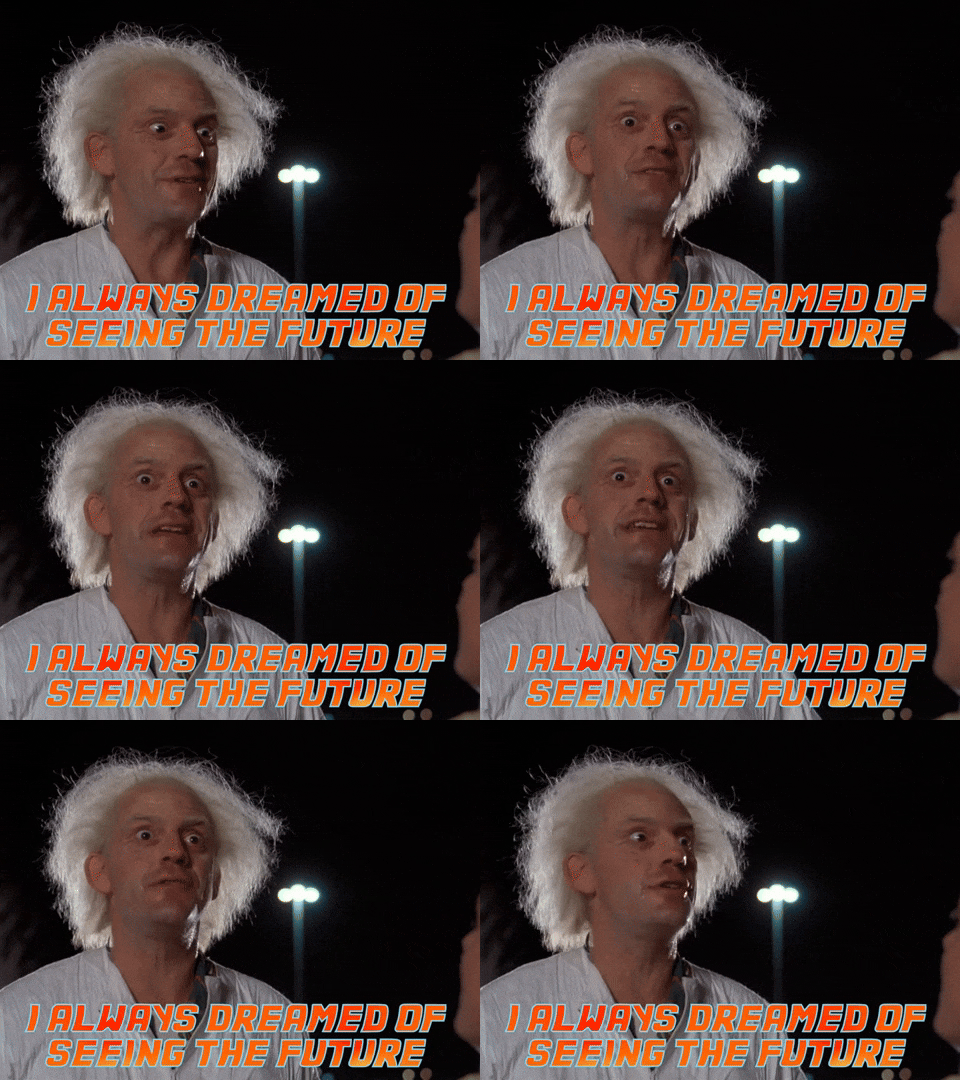

I know we can get through this together. Merry Christmas, everyone.

If you liked this post, then be sure to subscribe to my Patreon, where you can get posts like this one up to three months earlier than they release on this site. This post was originally released to patrons in August of this year, so if you want to stay up to date, then click the banner above to follow me on Patreon. It's free this month, as I have decided to discontinue my Patreon at the beginning of next year. It will no longer be available after January 1st, 2023. 

Thanks for reading. Stay safe out there.


Monday, July 11, 2022

Turning Red // Review #18


So, unless you’ve been living under a rock recently, I’m sure you’ve heard all about the new Disney/Pixar movie that is sweeping the internet, Turning Red.


Like Encanto that came before it, Turning Red has turned Twitter and Instagram into a haven for people who create fan art and post fan theories about this movie. Since the film premiered on Disney+ on March 11th, I have seen more than my fair share of think-pieces surrounding what Turning Red means to people, and the reception around it. 

Well- if only to feel included- I thought I would give you my take on the movie.

And my verdict was…

I loved it. I think Turning Red was pretty great, actually. It wasn’t perfect, but it was definitely a good movie. Dare I say, I even liked it better than Encanto.

My feelings about this movie are complicated, which is why I felt the need to break them down. I have to explain why this movie is undeserving of its outrageously low Rotten Tomatoes score and the wave of backlash that it’s gotten from some critics.

Rotten Tomatoes score for Turning Red (2022)


Rotten Tomatoes score for Soul (2020)

Currently (as of March 2022) Turning Red has a 72% fresh score on Rotten Tomatoes, which is noticeably less than some of its other Pixar counterparts, like Soul, for example. (Which, I mean, come on. *rolls eyes*)

I find this unacceptable (and not just because I didn’t like Soul). Because of this, I think it’s about time we dive into Turning Red to see what all the fuss is about.

Let’s start with the basics:

Category 1: Plot- B

To start, Turning Red is about a Chinese Canadian thirteen-year-old girl named Meilin "Mei" Lee. She is essentially her mother’s pride and joy: she excels in school and participates in her family’s Chinese temple when she’s home. Most of all, she always listens and respects her mother. 

Only… Meilin is growing up, which complicates things.

The real Meilin likes hanging out with her friends and obsessing about boybands and crushing on boys. That doesn’t mean that she doesn’t love her mother, it just means that she may not be the person that her mother wanted her to be.

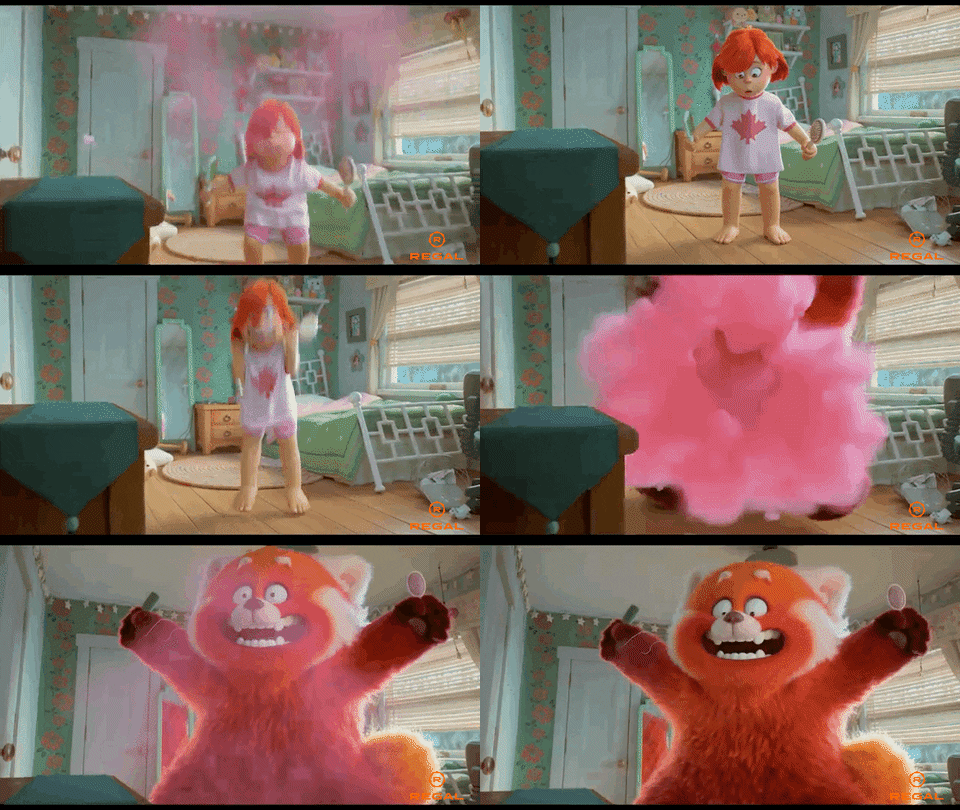
To further complicate things, Meilin has hit puberty, which means that she transforms into a giant red panda when she’s emotional.

Literally.


Now, I can’t help but point out the obvious panda in the room. This movie, like many other Disney movies before it, features a main character of color turning into an animal for a large portion of the movie in order to learn a lesson. Although, unlike some other films that have done this (*cough, cough* Soul), Turning Red uses Mei’s transformation as more than just a plot device. In this movie, her transformation into a red panda also serves as a metaphor for growing up (which I’ll touch on later).

Also, unlike other animated movies of this type (because as I’ve stated before, there is a list of movies where POC are turned into animals in cinema), Turning Red treats Mei’s transformation like a cultural touchstone that makes sense in-universe. Turning into a red panda has been passed down through her mother’s family for generations. There is no arbitrary magic spell or potion that turns the characters into animals like in The Princess and the Frog, or The Emperor’s New Groove, which was a nice change of pace.
 
Overall, the plot itself is about Meilin growing up, and trying to find herself when faced with the rising awkwardness of puberty. 

Which leads me into my next category-

Category 2: Themes- B

This movie explores all of the awkward moments associated with growing up, but chief among them is the theme that you can choose to be who you really are when you're going through puberty. Throughout this movie, Meilin is torn between being the person that her mother wants her to be and being the person that she really is around her friends at school. Turning into the red panda complicates this even further, as her mother attempts to help Meilin control this part of her, while her friends are more supportive of it, encouraging her to embrace her transformation. This inevitably leads to Meilin coming out of her shell and learning who she truly is as a person outside of her mom's shadow.

This movie also explores the lesson that embracing your quirks is nothing be ashamed of. For example, there is a really beautiful moment early into the movie where Meilin’s mom catches her drawing a boy that she has a crush on. This leads to Meilin experiencing immense shame and scolding herself for being “weird,” or “awkward” for doing so. I loved that part of the movie because it was delightfully real, and also telling of how sometimes we tell ourselves that we're not allowed to be as weird or awkward as we actually are. By the end of the film, Meilin comes to fully come to accept herself, and learns that it's normal to be awkward at her age. Truly, there's nothing wrong with it.


In addition to all of this, there are also themes surrounding Mei’s transformation into the red panda. Outside of the obvious metaphor of Mei “changing” being a stand-in for “growing up,” the red panda can be seen as a metaphor for having your period and developing as a young woman. If you interpret the title this way, then “turning red” is a clever double-entendre for the beginnings of quote-unquote “womanhood.”

Overall, the themes of this movie are not very subtle, and yet they're very universal (despite anyone who would argue the contrary), which is one of the reasons why I think this movie is so good.

Category 3: Characters- B+

This movie is very interesting to me, because like Encanto that came before it, all of the characters in this movie have developed a cult following on Twitter and TikTok, despite the fact that most of the characters are secondary to the actual plot of the film. 

In Encanto, a movie about a magical family living in an enchanted house, this was seen in the cosplays and fan art of fan-favorite characters, Dolores and Camilo.

Dolores and Camilo (brother and sister) from Encanto

In this movie, the fan community has come to really rally behind Meilin's friends: Miriam, Abby, and Priya. I have seen so many Twitter posts about the love that these girls have for each other and for Meilin as she goes through her transformation. Specifically, people online really love Miriam and Priya for their perceived role in the LGBTQ+ community (which I will touch on later).

Miriam, Abby, and Priya (from left to right)

Me, personally, I love Meilin's friends. I love that they're supportive of her when she is going through her struggles with her family, and they are nerdy and dorky in the same way that me and my friends were at that age. They don't pretend to be cool, and they lean into the awkward parts of themselves- like the fact that their favorite band is 4*Town. They look and act like awkward teens, and I’m here for every second of it. I get why fandom culture has adopted them as one of their own.

#squadgoals, honestly. 

Another strong character in this movie that I feel doesn't get enough love is Mei's mom, Ming. Ming is honestly one of the most compelling mother figures that I have ever seen in a Disney movie (and yes, I am including Mother Gothel from Tangled). She's complex in a way that never makes you feel like she doesn't love and care for Ming, and she's realized in a way that makes me feel empathy for everything that she's going through. It’s very clear that she is not the villain of this movie, even though she is one of Mei's main antagonists.


Ming also struggles with Mei’s transformation, as she tries to understand that her daughter is coming into her own. She’s a little controlling, but she means well, and that’s what makes her realistic to me. I feel like I’ve definitely met people like Ming. 

Personally, I love Ming so much, and I think more people should be talking about her. However, I would be remiss if I didn’t at least mention my absolute favorite character in the movie, Mei’s dad, Jin. Jin is the epitome of a supportive father figure, and we love that for him. He’s quiet and encouraging of Mei and supportive of his wife, all while cooking the most delicious food…

Overall, all of the characters in this movie felt real in a way that made this movie better. I could see my friends in Mei’s friends, and I could understand where Ming was coming from when she was attempting to help Mei out.

Strangely, out of all the characters in this movie, I feel like I have the least to say about Mei. As the protagonist of the film, she was relatable in her journey of self-discovery, and her awkward puberty experiences were traumatizing for someone who also experienced puberty, but beside the other characters in this movie, she can seem a little flat, unfortunately.

That said, though, no one in this movie was one-dimensional, which was great to see. All of the characters shined through in some way or another.

Category 4: Animation- A

It's pretty much a given at this point that the animation in this movie is going to be impeccable. In fact, Disney & Pixar is known for its fantastic animation in all of their movies, but something about the animation in Turning Red feels... different.

Most of this can be attributed to this movie's very clear anime influences. Since this movie takes place in the early 90s, there are several nods to popular anime like Pokemon and Sailor Moon throughout this movie. This is clever because these shows were incredibly popular at the time that the movie was set, while also expressing Mei's Asian background visually. This can be seen in everything to very clear setting parallels, to the over-exaggerated anime eyes that Mei and her friends get when they're listening to their favorite boy band.

Panda Mei and her friends sitting in front of a Sailor Moon inspired Toronto.

To top it off, there is also an iconic scene where Mei's dad is cooking dinner, and all of the food looks amazing, like it came straight out of a Studio Ghibli movie. It is clear that the creator of this movie, Domee Shi, wanted to pull from as many anime sources as she could to give this Pixar movie its own unique style.  

If you ask me, she succeeded, because I've definitely never seen anything like it, and I felt like this new animation style really injected some life into the standard Pixar animation style. This film really shines, and the animation really makes this movie that much more memorable.

Category 5: Diversity- C

One of the things that immediately stand out about this movie is that it's about a Chinese Canadian girl, which is a demographic that is not well represented in mainstream animated films, let alone films produced by Pixar.

This choice, however, can lead to less than sensitive (or even outright racist) reviews of the movie that consider this demographic to be too narrow, and thus the entire movie is "exhausting" to watch. 

This is not only insulting to the demographic that this film actively represents, but it is also incredibly telling of the stories that people are used to getting in movies, animated or otherwise. Asian girls are not usually depicted in such a humanizing way, especially not in animated children's movies. That said, most movie reviewers who post their opinions of films on the internet are white men. The fact that multiple reviewers have claimed that Turning Red is unrelatable to them due to the demographic is indicative of the fact that they're used to white stories.

As a black woman, I can't tell you how many movies that I've sat through that centered a white man doing something that I would never have done in a million years. And yet, I wouldn't call any of those movies unrelatable because most of the time, the stories displayed in those films are meant to show you a window into something deeper than the characters themselves.

The fact that this movie centers an Asian girl going through puberty has everyone up in arms, and it makes me sad, because it proves that we have a long way to go in terms of representation in media, especially in children's media.

Speaking of having a long way to go in children's media, while this movie does feature prominent Asian representation in the main cast, there is another minority group that is definitely lacking in representation in this movie: the queer community.

For those of you who aren't aware, Disney is in the middle of a series of controversies surrounding LGBTQ+ issues at the moment. If it isn't them outright funding supporters of Governor Ron DeSantis' "Don't Say Gay" Bill in the state of Florida, then its them nixing any potential queer plotlines from their Pixar properties. This is, unsurprisingly, in no small part because of Disney's support of the "Don't Say Gay" Bill.

This brings us back to Priya, Mei's Indian Canadian friend who was often depicted as a wannabe goth girl. Throughout the movie, Priya is seen holding Twilight inspired vampire novels, and obsessing with her friends about their favorite boyband, 4*Town. However, about midway through the film, it is revealed that perhaps Priya may have a crush on an actual goth girl when they meet at a party and begin dancing together very closely.

Priya dancing with her goth girlfriend.

Priya's feelings are never stated explicitly and remain subtext in the movie, however, it is definitely some sort of indication that Priya was meant to be coded as something other than straight. This has led to fans believing that Priya could be bisexual and interested in both boys and girls.

This bisexual theory has also been applied to Miriam and Mei, as some of their scenes together are slightly queer coded and intimate, even though the two are best friends. Once more, there is never an overt queer love story between the two, and anything that may be perceived as queer is only subtext.

Perhaps the most telling of this incident is the character Tyler, who bullies Mei and her friends up until the third act of the movie, when the girls discover that he likes 4*Town, too. Apparently, Tyler had a storyline in the movie that had to be cut out of the final version of the film. It was never revealed what this storyline entailed, but many fans have speculated that Tyler was secretly gay and that's why his storyline had to be reduced.

Overall, it is disappointing that Disney likely cut any or all storylines regarding overt queer characters due to their support of the "Don't Say Gay" Bill. I know that a lot of people were and continue to be hurt by this, and I just wish that Disney would stand by the people that just want to love the people they love.

While this movie shines in its Asian representation, Disney does not get a pass on its poor treatment of the LGBTQ+ community.

Category 6: Kid Friendliness -B+

Here's the thing about this movie: it's controversial.

But honestly... it really shouldn't be.

The people that believe that this movie isn't appropriate for kids are fooling themselves into thinking that teenaged girls are much purer than they actually are. These people are often misguided parents or puritanical adults who believe that young women should be chaste and obedient, no matter the personal and social cost. It's the same mentality that pretends that teenagers shouldn't have access to decent sex education classes, and the same mentality that ignores the growing number of teenaged girls who are experiencing depression and suicidal thoughts. 

These people are not paying attention.

Teenaged girls are people too, and frankly, Turning Red just treats them like they are. Instead of presenting them in the standard kid's movie teen-girl archetypes of "boy crazy," or "nerd," Turning Red allows the girls in this movie to be weird and earnest and awkward. More to the point, there are never any inappropriate mentions of sex or adult themes in the film that would make this movie inappropriate for children. The closest that this movie comes to discussing anything remotely related to sex (and I can't stress enough that this is unrelated) is the mention of Meilin getting her period.


After watching Turning Red, it becomes very clear that this controversy is not about the movie at all, but it's about how much society hates teenaged girls. (Especially when they look like teenaged girls.) 

As proof, here's a review that I found on Rotten Tomatoes without even having to look that hard:


This movie is focused on the issues surrounding a teenaged girl becoming a woman and developing through puberty. This is the sticking point for most critics that claim that this movie is inappropriate for children. I would argue that the people who think that blatantly believe that women’s issues shouldn’t be commonly discussed in any capacity, let alone children's media. 

This movie is made with the intent for teen girls to normalize their changing bodies. That makes some critics uncomfortable. However, their discomfort at seeing this is due to the misogyny that is rampant in our culture. 

(A Turning Red hot take from a "misguided parent or puritanical adult")

The implication above is very clear: Somehow this Pixar film featuring a main female-teenaged protagonist cannot be a "family favorite" along the lines of Ratatouille or Cars (presumably because the author relates to rats and motorized vehicles more than Chinese Canadian teens, but what can I say). The author of the post criticizes the very notion that teenaged girls can't "find themselves," and should listen to their parents, as if this would make a better movie (as if Nemo from Finding Nemo didn't literally swim into open ocean to get away from his smothering father). And- once more- the edgiest, most progressive thing about this movie is that it mentions periods and shows what a pad looks like. If we're going by that standard, every Always commercial has been promoting progressive adult themes since the mid 20th century.

It’s the Twilight problem again, in which people are forced to confront the fact that the thing they don’t like is widely hated just because teenaged girls like it or see themselves in it. As soon as teenaged girls stop liking it, it becomes more socially acceptable to enjoy the media that was so popular many years ago (take the Twilight Renaissance, for example). This can impact both women and men, and it runs deep in our society.

To put it simply, our society hates teenaged girls. (That is to say, despite teenaged girls being the biggest driver of economic trends) We can appeal to them only so much before we start making fun of the things they enjoy or the things they think, because ultimately our culture cares more about the ideas of middle-aged men than a new generation of women. 

Rachel Shukert, the showrunner of the recently canceled Netflix show, The Baby-Sitter’s Club, essentially confirmed this in her Variety exit-interview:


Shukert’s whole interview was incredibly interesting, and several good points were made throughout about children’s media for young girls. I highly recommend reading the whole thing.

I still argue that Turning Red is an important movie for everyone to watch, not just teenaged girls. I think if more people watched it and learned about the difficulties associated with growing up as a teenaged girl, they would have more empathy for them, even if they don’t (quote-unquote) “relate.” 

You don’t have to menstruate to relate, everybody. We’ve all been teenagers before. Adolescence is awkward no matter if you’re a boy, a girl, or a nonbinary teenager. Middle school was rough for all of us.

Growing up can be awkward and terrible and really embarrassing, but Turning Red explores this in a way that is both kid and preteen friendly. 

Hell, I’m an adult and this movie made me cry. 

I really had a good time with Turning Red, and as someone who watches a lot of kid’s movies, I would say that this movie is definitely appropriate for people of all ages.


Overall, I really liked this movie. I laughed, I cried, I thought about all of the insane crushes I had when I was thirteen… 

Even though I wasn’t a teenager in the early 2000s, Mei and her friends felt real in a way that was so close to home. I really liked this film and how it represented growth and maturity, without forcing anyone to grow up too fast or completely turn their back on their true identity.

I enjoyed Turning Red. If nothing else, I was thoroughly amazed at how this movie accurately captured how it felt to be an awkward teenager. Because of that, I would give this movie a B+.

Thank you for reading everyone! 

If you liked this post, then be sure to subscribe to my Patreon, where you can get posts like this one up to three months earlier than they release on this site. This post was originally released to patrons in March of this year, so if you want to stay up to date, then click the banner above to follow me on Patreon. If you don't want to support me monthly, then consider making a one-time donation on Ko-Fi using the button below.

Have a great day, everyone. Take care of each other.

Thursday, December 16, 2021

Spider-Man: Into the Spider- Verse // Review #14


"Alright. Let's do this one last time..."


On the eve of the premiere of the newest Marvel Spider-Man movie, I think it’s time we settled the age-old debate: Spider-Man: Into the Spider-Verse is hands-down the best Spider-Man movie.

I don't care what anybody says: whether you're team Maguire, Garfield, or Holland- I think we can all agree that THIS is the best Spider-Man movie ever released.

Since Spider-Man: No Way Home is rumored to have* (*definitely has) all of the previous iterations of the character put to film, I thought it was only fit to talk about my favorite Spider-Man movie that references the spider-verse. After all, Sony Animation did it first.

To me, Spider-Man: Into the Spider-Verse is one of the few examples of a perfect movie. It has all of my favorite things: unproblematic minority representation, a BANGING soundtrack, and a fantastic and moving story that will leave you feeling something by the end of it.

This movie was just so... different than what I expected it to be going into it, and it was different in a way that left me feeling inspired and refreshed. It was as if all of the superhero movies that had come before this had gone stale, and this was the coffee that would awaken my senses to the possibilities out there.

Let’s discuss why Spider-Verse is my all-time favorite superhero movie, and why it should be yours too. 

SPOILERS FOR SPIDER-VERSE AHEAD.

Category 1: Animation- A+

Here's the thing about Spider-Verse: this movie is the most visually stunning, creatively animated movie I've seen in my entire life.

While most animation studios try to make their settings and characters seem more lifelike or attempt to blend in with the Disney aesthetic, Sony Animation actively decided to innovate the space and create an entirely new method of animation.

Instead of attempting to create a modern New York that looks realistic, the creatives down at Sony decided to emulate the comic book style that the story was based on. Because of this the entire movie feels like a comic book has come to life in a new and exciting way. As Charles Solomon puts it in his New York Times piece about the movie, ""Spider-Verse"[sic] celebrates its print origins with bold graphics and mainstays of comic-book style, including thought balloons, printed words and wavy lines to indicate a tingling Spidey Sense" (par 2).

Various animation techniques were used to make this possible, such as half-toning (the use of the gradient dots in the background of every frame of the movie) and motion smearing instead of the traditional motion blurring, which led to Sony Animation eventually filing for patent protection for their new animation process.

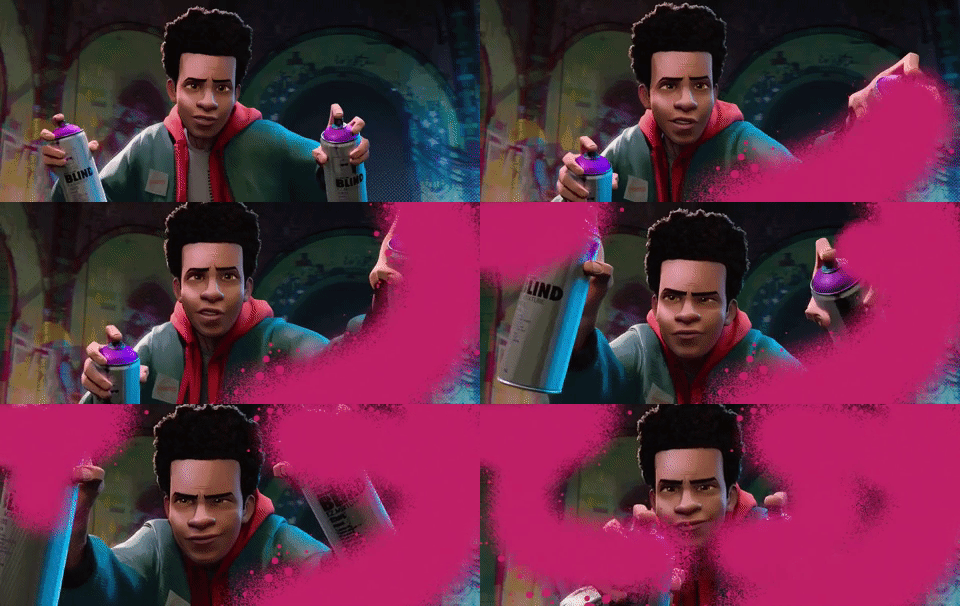
Miles Morales, the one true Spider-Man

I will say, though, to the uninitiated, this movie is a little dizzying because of how uniquely it is animated. Some of the frames of the movie are intentionally blurred, with many details slightly out of focus. This was a little bit of an issue for me the first time I watched it in theaters in 2018, as I thought I was meant to be wearing 3D glasses. As someone who wears glasses all the time, it felt a little disorienting to be thrust into this new animation style when I wasn't sure exactly what to focus on, but I still contend that this movie was definitely the most refreshing and innovative form of media I had seen in a long time.

Overall, I really appreciate the Spider-Verse animators for making something so different in a world where animated movies have all begun to look the same. The animation is phenomenal throughout, and I would love to see what they do with the sequel.

Category 2: Writing- A

I think this movie a perfect film because it was so well written and thoughtfully constructed. It was different from what I expected the first time I saw it, but in the best way. 

I'll admit, when Spider-Verse first came out I only wanted to see it because I heard that this version of Spider-Man was a black kid. While that definitely factored into why I liked this movie so much, that isn't the only thing I liked about this film. Spider-Verse turned out to be one of the best superhero movies I have ever seen, and a lot of that boiled down to the writing. 

Spider-Man: Into the Spider-Verse follows the main character, Miles Morales, as his father transfers him from his Brooklyn school to a prep school in the city. Miles is distant from his father because he thinks his father is embarrassing, and he is close with his uncle Aaron, who shares his passion for hip-hop music and street art. One night, while Miles is spray painting with his uncle Aaron, he is bitten by a radioactive spider.

Soon after, Miles stumbles into a plot by New York's biggest crime boss, Kingpin, as he attempts to revive his wife and son by opening a portal to another dimension. As you can imagine, this portal opens up a rift... Into the Spider-Verse.

Get it? Like the name of the movie!

ANYWAY, Kingpin kills the version of Spider-Man that was in Miles's dimension, which leaves the position open for Miles, since he was just bitten by a radioactive spider. Only, Miles doesn't know the first thing about being Spider-Man, and so he has to enlist the help of Peter B. Parker, the Spider-Man from another dimension, in order to learn the ropes and take down KingPin to shut down the portal.

I definitely oversimplified the plot of the movie to condense it into this review, but believe me when I say that this film is magnificent. The story structure of this film is so strong, and it immediately establishes everyone who is important without getting too complicated or confusing (like what happened in Avengers: Endgame when they had to explain time-travel for ten solid minutes). Even though there are multiple characters in this movie, it is immediately clear that Miles is the main character of the movie, and his journey to accept the responsibility that comes with his new powers.

Overall, this movie is phenomenally structured and well put together. Unlike Wonder Woman 1984, I never once felt like this movie was dragging or that scenes could have been removed from the final cut. In fact, I loved how all of the known story beats were condensed into montages so time wasn't wasted. The audience doesn't need to run though the old Spider-Man origin story with Uncle Ben again, because this movie is starting fresh with Miles Morales, the new Spider-Man.

Speaking of starting fresh, I think a really smart thing that the writers did was draw clear parallels between every version of Spider-Man, including Miles. This starts when Miles starts to get his powers, and his behavior essentially mirrors the original Spider-Man comic to a T. And while Miles's superhero origin story may be different from the rest of his counterparts, it is similar to Peter Parker's in the fact that- SPOILER- his uncle got shot by a criminal. It is also because of the loss of someone close to him that Miles had to learn that "with great power comes great responsibility."

Overall, I love the way this movie is written. I can tell that the writers spent hours and hours getting it right, combing through the story to make sure it was as tight and cohesive as possible.
  
Category 3: Comedy- A

The funniest thing about this movie is how many iterations of Spider-Man there actually are. Because the movie is called Into the Spider-Verse, you have to expect that the writers were playing with every version of Spider-Man that has ever existed.

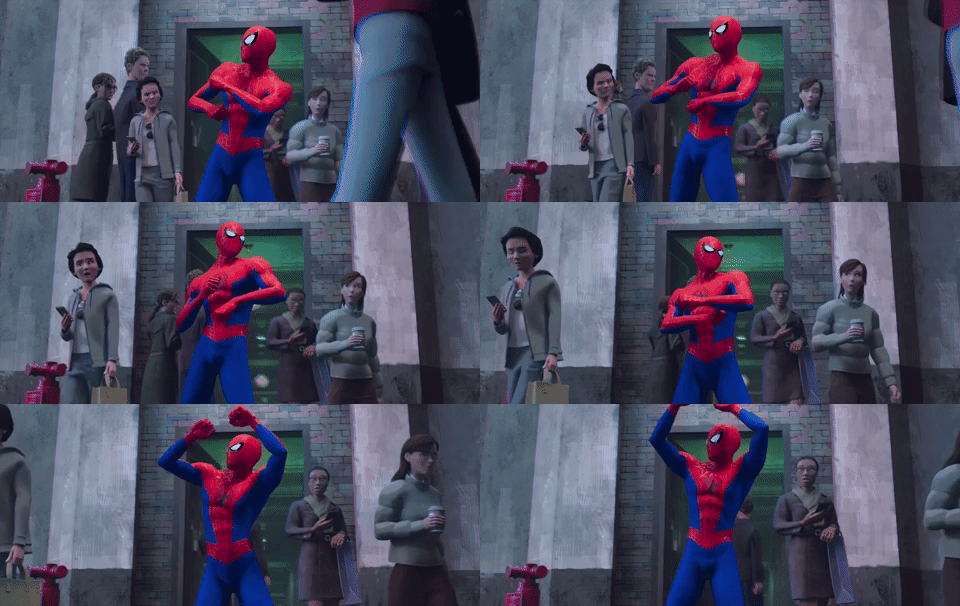
This movie jokes about every iteration of Spider-Man you can think of- covering everything ranging from the comic books to the Spider-Man movies starring Garfield and Maguire. In fact, in the first few minutes of the movie, Spider-Man (voiced by Chris Pine) jokes about all of the previous iterations of his character, including mocking the infamous dance scene from Spider-Man 3. Spider-Man (Pine) also mentions getting his own popsicle, breakfast cereal, and even releasing a spider-themed Christmas album (which we’ll get to later). I love this opening because not only is it poking fun of Spider-Man's own branding, but it's the exact kind of meta-humor that I can get behind. 


"Wink-Nod" reference to the end of Spider-Man 2

This movie is full of "wink-nod" moments, where a character breaks the fourth wall to make a joke for the people watching the movie instead of the people in the film's universe. (An example that immediately comes to mind is Spider-Ham saying, "That's all folks," and Peter B. Parker asking if legally they're allowed to say that.) They also make fun of more general superhero tropes, like how there is always some "goober" that they need to retrieve in order to save the day- be it a flash drive, a computer chip or a memory card. 

I enjoyed the meta-humor of this movie because it's not as overt as something like Ferris Bueller's Day Off, and it's not as obnoxious as something like Deadpool. It's just subtle enough to play with the multi-verse in a fun way that establishes each character and the world around them.

The humor of this movie definitely goes hand-in-hand with the writing for the film; if the story structure wasn't good, the humor wouldn't have landed as well. Once more, kudos to the movie's writers, Phil Lord and Rodney Rothman, for making a movie that is well constructed and funny without being distracting. Without them, I'm sure this movie wouldn't have had half of the memorable comedic moments that it has. 

Category 4: Music- A+

The music in this movie has no business going as hard as it does. 

Say what you want about Spider-Verse, but you can't tell me in good conscience that the soundtrack isn't stacked with bangers. The accompanying playlist to this movie is very important to the story of the film, and it's also important to me personally. This is because the music in this film is heavily based in hip-hop, and it's also just really good music. 

Miles Morales, an Afro-Latino high school kid from Brooklyn, is the new Spider-Man. His father and his uncle are black, and so he likely grew up with the music that is played on the soundtrack. The hip-hop that is present throughout this movie function as a literal playlist to Miles' life as a black kid from Brooklyn, even though he has been thrust into the responsibility of becoming the next Spider-Man. This is evidenced when Miles visits his Uncle Aaron early on in the movie and the first thing the audience sees of Uncle Aaron is him putting on "Hynoptize" by Biggie Smalls. 

To reinforce the importance of the music in this movie, the film is bookended with the song "Sunflower" by Post Malone and Sway Lee, and Miles even sings this song in universe when he's getting nervous in order to calm down. The music is important to the movie because the music was important to the character.


Spider-Verse feels like it's one of those films that is inseparable from its soundtrack. There is no Spider-Verse without the music, and the music works so much better with the movie as a backdrop. I have a Letterboxd list of other movies that function in a similar way (like how the Fairy Godmother's rendition of "Holding Out for a Hero" is inseparable from Shrek 2). 

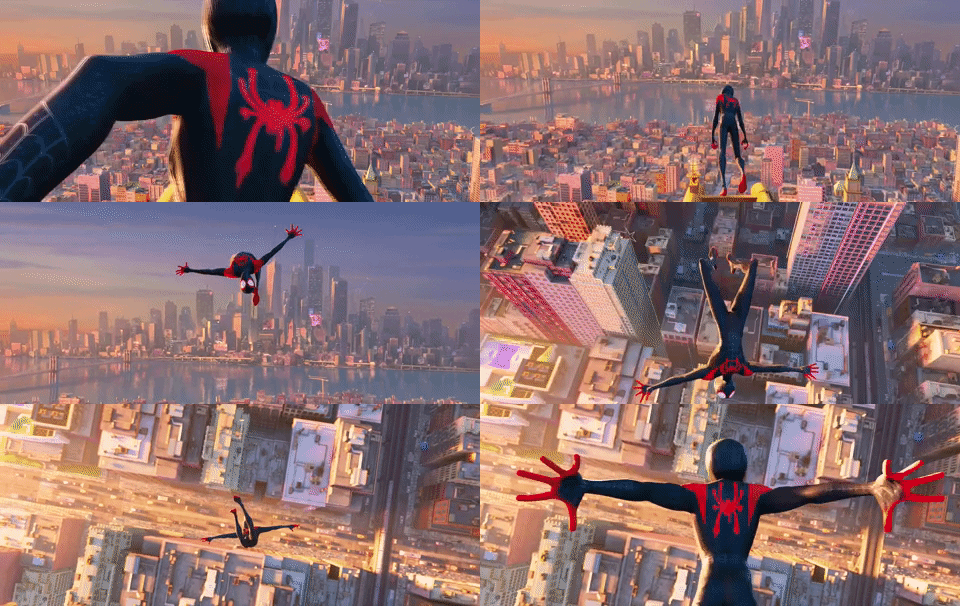
If you're looking for an example of how the movie and the music have become practically inseparable, look no further than the scene where Miles jumps off a building in a leap of faith while "What's Up Danger" by Black Caviar and Blackway plays in the background: 


This scene is one of the most iconic moments in the entire film (it was even featured in the early trailers for the movie), and the song underscoring it perfectly captures the mood and the tone without taking away from the scene by being distracting or out of place. The music works well with the movie because it was produced with the intent to be in it, instead of layered on top of it in post.


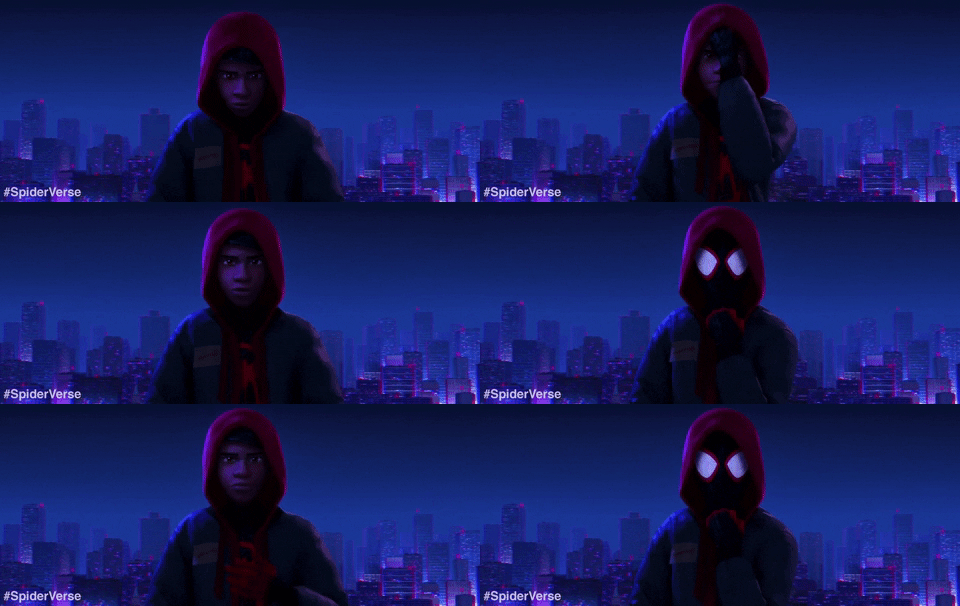
Miles Morales in his "What's Up Danger" moment.

To me, the Spider-Verse soundtrack is a good album all on its own, but the movie really makes it pop. I have most of the songs on the album on several of my Spotify playlists, but my personal favorite songs from the album are "What's Up Danger?", "Sunflower", "Not Afraid of the Dark", and "Familia."

Category 5: Casting- A

I'm not trying to spoil everything about this movie, but the film is titled Into the Spider-Verse, and so it's not a reach to say there are a few Spider-Men in this movie.

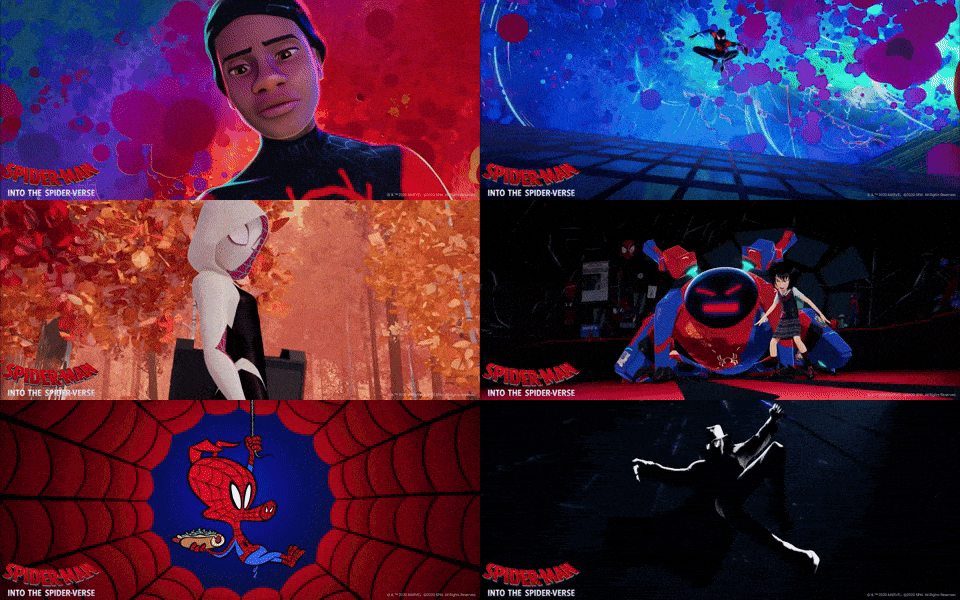
To be precise, there are exactly seven Spider-Men. (Well, five Spider-Men and two Spider-Women if you want to get technical about it.) Along with the main character of Miles Morales, there is Peter Parker, Peter B. Parker, Peni Parker/ SP//dr, Spider-Gwen, Spider-Noir, and Spider-Ham. 


To voice all of the unique versions of the Spider-Man character, (who all have very real comics, by the way) the casting department really went out of their way to pick actors who would be perfect for their roles. Each character's voice actor definitely plays into their strengths in this movie. For example, who else would you expect to voice the handsome, charming Peter Parker aside from Chris Pine? He's been nothing but handsome and charming in everything he does. 

Same token, who would you expect to be the schlubby, loser Peter B. Parker, aside from Jake Johnson, resident stoner personality?

Casting John Mulaney to play the silly Spider-Ham with his insanely cartoonish timbre? Inspired!

Casting Nicolas Cage to play the black and white Spider-Noir from the 40’s who jokes about egg creams? Excellent choice, no notes. 

Shameik Moore was the perfect choice for the lead character, Miles Morales, because he captures Miles’s confidence and naiveté without making him come across as cocky or stupid. Miles is embarrassed by his corny dad, and he’s insecure about all the normal things that a teenager is meant to be insecure about, like talking to girls and going through puberty. In the movie you can tell that Miles is just a normal kid from Brooklyn who just happened to be bitten by a radioactive spider, because Shameik plays him convincingly.

I didn’t mention everyone in the phenomenal voice cast (because then this review would just be me raving about every individual voice actor) but I definitely believe that everyone was perfectly cast to play the roles they were in. The casting department could not have done better than this, and it shows in how well the movie turned out.

Category 6: Kid-Friendliness- A

Okay, hear me out: I think this movie is perfect for kids.

In a lot of ways, this film reminds me of another Marvel-comic-book-turned-animated-feature, Big Hero 6. Both movies contain a loveable cast of misfits who have to take down a mad-man determined to open an interdimensional portal to bring back a lost family member (They have weirdly specific parallels, actually). Both of them contain arcs where the main character loses a family member and has to learn from it, and both of them are really important to me on a base level.

I really think that Spider-Verse is a better movie for kids to watch, though, because while both movies are superhero ensemble films, Spider-Verse has the core theme of "Anyone can become a superhero if you take a leap of faith." While Big Hero 6 has a similar moral, it is somehow buried under the theme of coping with grief and loss. The concept of death and mourning was more important to that movie's plot than it was for Spider-Verse, despite the subject matter being surprisingly similar. 

I'll also say that Spider-Verse has authenticity going for it. Something that we don't see a lot of in mainstream animation is depictions of actual, real people- let alone people of color. I mentioned this in my review of Soul, but I really appreciate movies that can depict black culture in a way that feels authentic and lived in. This movie was a game-changer for black and Afro-Latino kids that could see themselves in Miles Morales. Prior to 2018 when Black Panther and Spider-Verse came out, the only person of color that most people could look up to as a mainstream superhero was Halle Berry (both as Storm in X-Men and as Catwoman in Catwoman).

I feel like Spider-Verse is a good time to watch for all ages because the heart of this movie is pure. The heart of the film is the relationships between all of the characters, because it is the characters that make this movie, really.

After all, anyone can wear the mask.


Perhaps it's uninteresting to read my review raving about a film that's got 10's across the board, but I think that this movie is perfectly deserving of its hype. In fact, I think more people should be talking about it.

It's true that Spider-Verse won the Best Animated Picture Oscar in 2019, but I contend that this movie should have won for Best Picture. Not only did it deserve the recognition, but it would also be true that Spider-Verse was the best movie to come out that year. Even though it didn't win Best Picture, though, it has a Best Picture win in my heart. I love this movie so much, and I have nothing but good things to say about it.


This is, quite literally, one of the best superhero movies ever made. Spider-Man: Into the Spider-Verse is better than most of the other Marvel fare that has come out recently, and that is including all of the recent Avengers movies and "Phase Four" projects. With the sequel coming out next year, I'm honestly a little worried about how Sony Animation is going to top themselves, and I think that's saying something.

Clearly this movie is an S rank in my book. If you haven't already seen it, feel free to watch it with your family this holiday season. You should definitely watch it before Spider-Man: Across the Spider-Verse comes out in 2022.

 
If nothing else, you should listen to the Spider-Verse Christmas album this Christmas season. (Yes, it’s real!) It’s sure to make your Christmas merry and bright. 

Thanks for reading! Have a safe and merry Christmas everyone!